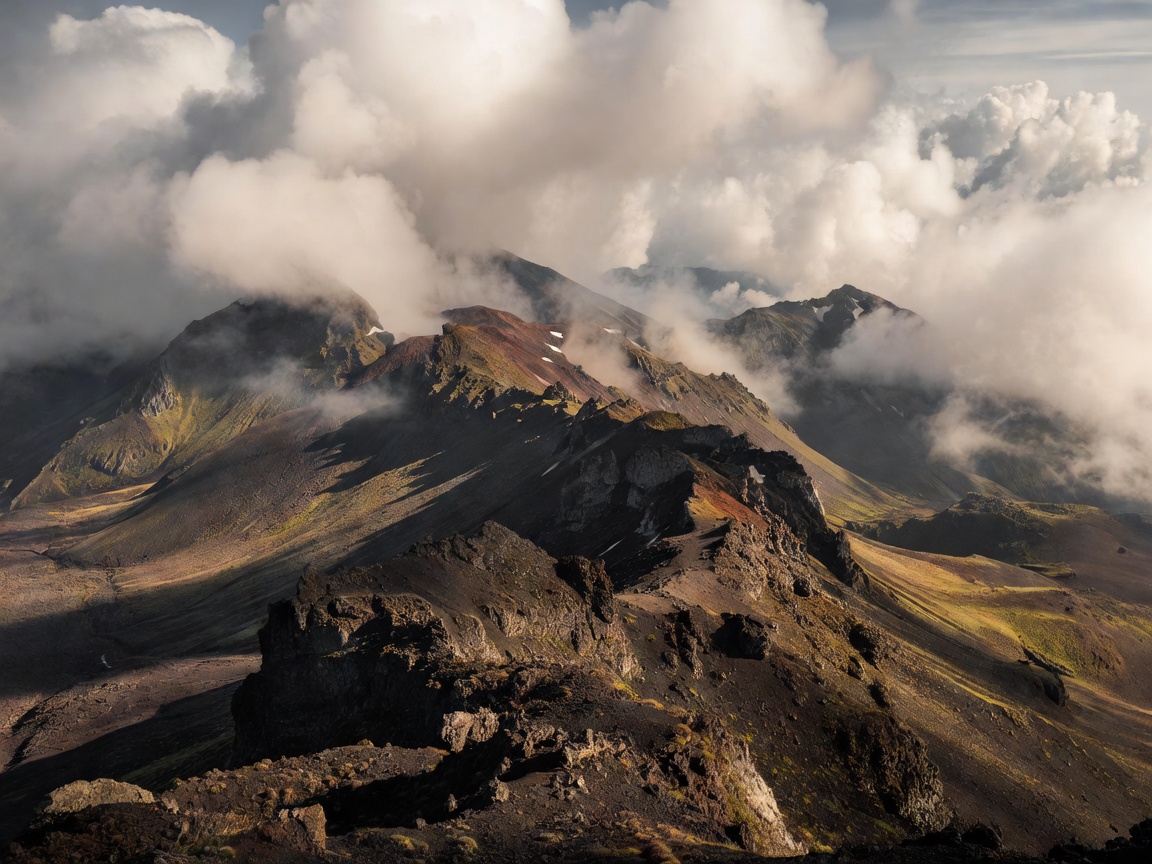
Spring: changing surfaces
Spring can bring longer daylight and improving access, but conditions often change quickly. Snow may remain at elevation while lower paths are wet. Rain can turn ash and fine volcanic soil into mud, and melting water may enlarge channels or soften trail edges.
Pack for variation rather than a single forecast. Waterproof layers, footwear with dependable grip and a flexible route are useful. Check local notices because seasonal opening patterns differ between regions.
Summer: exposure and activity
Summer usually provides longer daylight and warmer temperatures. It can also increase visitor numbers, traffic near popular viewpoints and pressure on fragile ground. Dark volcanic surfaces may feel exposed in direct sun, while high ridges can remain windy.
Start with the permitted route, water plan and shade assumptions. Do not equate warm lowland weather with safe summit conditions. Island and northern regions can still experience cloud, rain or strong wind.
Autumn: shorter days
Autumn brings earlier darkness, more rainfall in many regions and changing wind patterns. Visibility can be excellent one hour and poor the next. Wet surfaces expose the difference between firm lava and loose ash.
Allow more time for navigation and return travel. A route that is comfortable in dry summer weather may require a shorter objective or a different viewpoint in autumn.
Winter: snow, ice and restricted access
Winter can cover volcanic forms with snow and ice. This changes the visible geology and the physical route. Reduced daylight, cold exposure and wind increase the cost of delays. Some paths, roads or facilities may be restricted, but current conditions must be confirmed locally.
Do not improvise around closures or barriers. A qualified guide may be appropriate for technical winter terrain. This guide does not provide instructions for entering hazardous volcanic or geothermal areas.
Regional differences
Atlantic islands can have rapid cloud and wind changes. Mediterranean regions may combine heat with dry surfaces and high seasonal demand. Northern regions can have long summer daylight but significant exposure. Mainland volcanic areas can have more continental temperature swings. These are broad patterns only.
A simple seasonal check
- Check official access and weather sources close to travel.
- Confirm daylight for the actual route, not just the destination.
- Expect mud, snow, ice or loose ground where elevation changes.
- Carry layers and choose footwear for the surface.
- Keep a lower-risk alternative for poor visibility.
Good for
Summer often suits first-time visitors who want longer days. Spring and autumn suit quieter, flexible trips. Winter suits experienced travellers with appropriate equipment and current local advice. No season guarantees access.
What to know
Weather and volcanic conditions are site-specific. Follow official guidance and remain on permitted routes. See trip planning, regional comparisons, and contact.